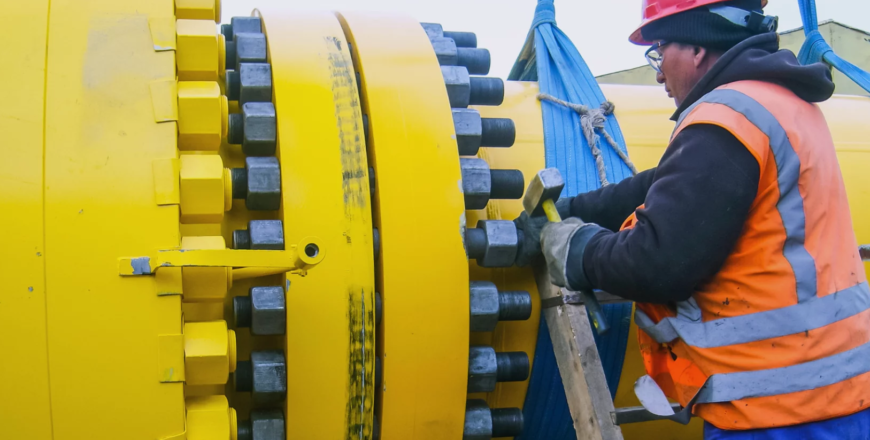
Course Content
A Flange Management Course is designed to train individuals involved in the installation, inspection, maintenance, and management of flange joints in piping systems. Flanges are critical components used to connect pipes, valves, pumps, and other equipment, and managing them correctly is essential for ensuring safety and preventing leaks in industrial environments, especially in sectors such as oil and gas, petrochemicals, and power generation.
This course is valuable for mechanical engineers, maintenance personnel, plant operators, and safety officers working in industries that rely on pressurized systems
Course Objectives:
- Understanding Flange Types and Components:
– Develop a thorough understanding of different types of flanges, bolts, gaskets, and nuts, as well as their applications.
- Preventing Flange Leaks and Failures:
– Learn the techniques and best practices to prevent leaks and failures in flange joints through proper installation and maintenance.
- Proficiency in Flange Installation:
– Master the correct procedures for installing and assembling flanges, including the use of tools and torqueing techniques.
- Improving Safety in Flange Operations:
– Gain awareness of safety protocols and environmental risks associated with flange management and how to mitigate them.
- Conducting Flange Inspections:
– Acquire the skills needed to inspect flanges and identify early signs of wear, misalignment, or failure.
- Flange Failure Analysis and Troubleshooting:
– Understand how to analyze the root causes of flange failures and implement effective solutions to prevent future occurrences.
- Compliance and Documentation:
– Learn the importance of maintaining proper records for flange joints to ensure regulatory compliance and operational efficiency.
- Hands-On Experience:
– Participate in practical exercises and simulations to reinforce theoretical knowledge and develop hands-on skills.
Course Outline:
1. Introduction to Flanges:
– Overview of different types of flanges (weld neck, slip-on, blind, threaded, etc.).
– Materials of construction and their applications.
– Standards and specifications (e.g., ASME, ANSI, DIN)
2. Flange Joint Components:
– Bolts, gaskets, and nuts.
– Types of gaskets and their selection criteria.
– Materials and grades of bolts and nuts.
3. Flange Integrity and Leak Prevention:
– Common causes of flange leakage.
– Methods to ensure flange joint integrity.
– Role of gaskets in preventing leaks.
– Impact of temperature and pressure on flange performance.
4. Flange Installation Procedures:
– Correct assembly procedures.
– Bolt tightening techniques (e.g., torqueing and tensioning).
– Use of proper tools and equipment.
– Correct bolt tightening sequences (cross pattern, star pattern, etc.).
– Torque values and their importance in flange management.
5. Inspection and Maintenance of Flanges:
– Visual and non-destructive testing (NDT) techniques.
– Periodic maintenance procedures.
– Detecting flange misalignment, bolt elongation, or gasket degradation.
– Using inspection checklists.
6. Flange Failure Analysis:
– Common causes of flange failure (corrosion, fatigue, improper installation).
– Techniques for identifying root causes of flange failures.
– Preventative measures and corrective actions.
7. Health, Safety, and Environmental Considerations:
– Safety protocols during flange installation and maintenance.
– Environmental risks due to flange leaks (e.g., hydrocarbons, chemicals).
– Use of Personal Protective Equipment (PPE).
– Emergency procedures in case of a flange failure.
8. Flange Management Documentation:
– Record keeping and documentation for flange management.
– Flange tagging and tracking systems.
– Regulatory compliance and standards.
9. Practical Exercises and Case Studies:
– Hands-on training with flange assembly and disassembly.
– Simulation exercises on flange tightening, torqueing, and inspection.
– Case studies on flange failure incidents and lessons learned.